Zero-Click Search vs. Paid Ads – Which is Better for…
Zero-Click Search vs. Paid Ads – Which is Better for ROI?

SEO Meta Information
Meta Description
Struggling with zero-click search vs. paid ads? Discover which strategy delivers better ROI and how to balance your marketing budget for maximum growth.
Focus Keyword
Primary: Zero-click search vs. paid ads
Secondary: ROI of organic search, paid advertising strategy, zero-click content optimization, digital marketing ROI
LSI Keywords: Search engine results page (SERP), AI Overviews, customer acquisition cost, organic traffic growth, PPC performance, search intent
Target Search Intent
Commercial/Informational: The user is evaluating marketing channels to determine where to allocate budget for the best return on investment.
Featured Snippet Optimization
Quick Answer: Zero-click search vs. paid ads is not a binary choice; it is a balance of long-term brand authority versus immediate, scalable traffic. While zero-click search impacts organic click-through rates, organic content builds trust and lowers acquisition costs, whereas paid ads provide instant, measurable ROI for high-intent conversions.
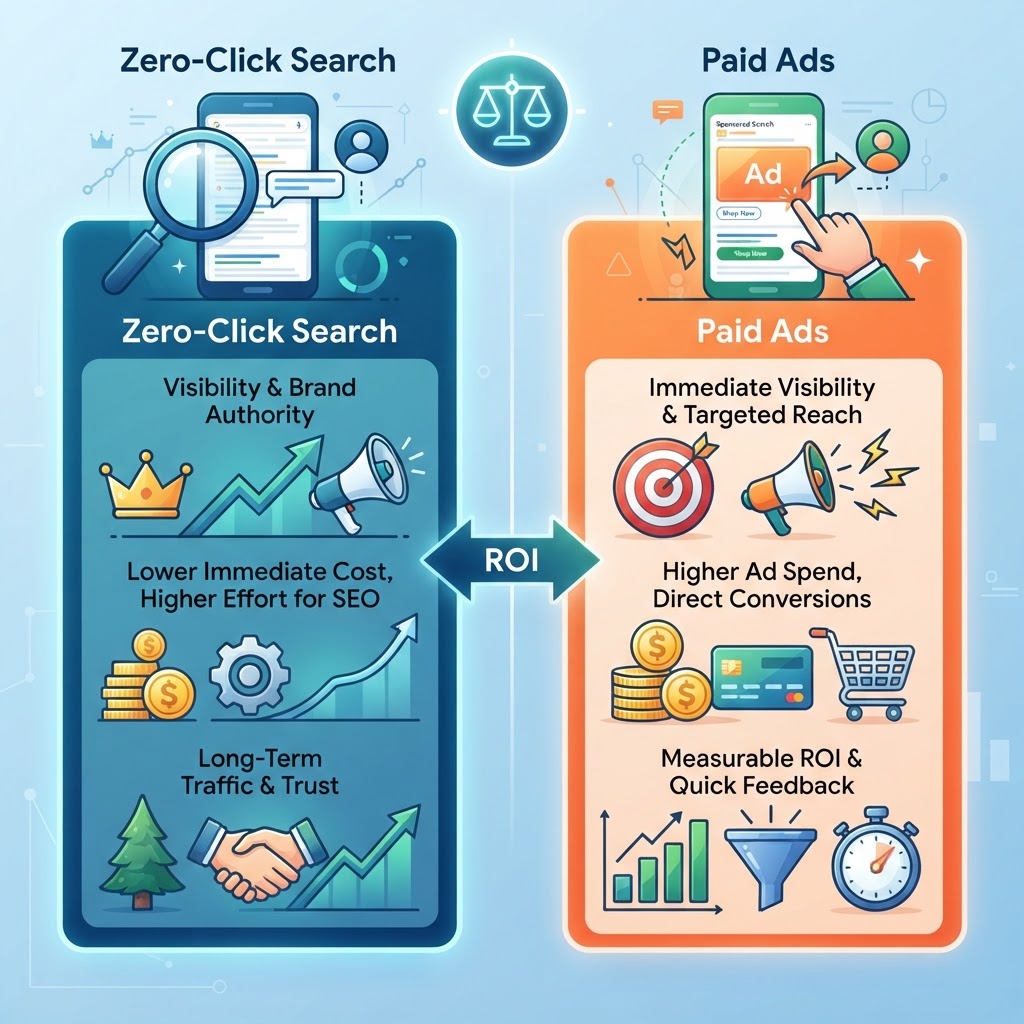
Table of Contents
- Understanding the Zero-Click Search Landscape
- The ROI Reality: Organic vs. Paid Performance
- Comparing Strategic Advantages
- Best Practices for a Hybrid Marketing Strategy
- Frequently Asked Questions
Understanding the Zero-Click Search Landscape
In the modern digital ecosystem, zero-click search vs. paid ads has become a central debate for marketers. A zero-click search occurs when a user finds their answer directly on the search engine results page (SERP) without needing to visit a website [7]. With nearly 60% of mobile searches ending without a click, brands are forced to rethink how they measure success [7].
The Impact of AI and SERP Features
Search engines now prioritize instant answers through featured snippets and AI Overviews [8]. While this reduces traditional traffic, it offers a unique opportunity for brand visibility. By providing high-value information directly in the SERP, you establish authority even when a user doesn’t click through to your site [10].
- Brand Authority: Appearing in snippets builds trust.
- AI Overviews: These features can indirectly impact paid ad visibility [2].
- User Intent: Not every search requires a website visit to satisfy the user.
The ROI Reality: Organic vs. Paid Performance
When evaluating the ROI of organic search versus paid advertising, the primary difference lies in sustainability and speed. Organic search compounds over time; strong rankings continue to drive traffic long after the initial investment [3]. Conversely, paid ads offer immediate visibility but stop delivering results the moment your budget is exhausted [3].
“Organic search compounds over time. Strong rankings keep driving traffic long after publication, while paid visibility stops the moment the budget does.” — Fractl Research [3]
How to Measure True ROI
- Track Assisted Conversions: Recognize that zero-click content often acts as a top-of-funnel touchpoint.
- Analyze Customer Acquisition Cost (CAC): Organic efforts typically lower your long-term CAC compared to aggressive PPC bidding [1].
- Monitor Brand Sentiment: Use organic visibility to build trust, which improves the conversion rate of your paid campaigns.
Comparing Strategic Advantages
Choosing between these channels depends on your business goals. While paid ads are essential for capturing high-intent traffic, organic search is the backbone of a sustainable digital marketing strategy [3].
| Feature | Organic Search | Paid Ads |
|---|---|---|
| Speed to Results | Slow (Months) | Instant |
| Cost Structure | Fixed/Labor | Variable/Auction |
| Sustainability | High (Compounding) | Low (Budget-dependent) |
Best Practices for a Hybrid Marketing Strategy
The most successful brands don’t choose between zero-click search vs. paid ads; they integrate them. Use paid ads to test keywords and landing pages, then transition high-performing topics into your long-term organic content strategy [4].
💡 Pro Tip:
Optimize your content for “zero-click” by providing concise, structured answers (like definitions or lists) at the top of your pages. This increases your chances of winning featured snippets, which keeps your brand visible even in a no-click environment [7].
Frequently Asked Questions
Is zero-click search bad for my business?
Not necessarily. While it reduces direct traffic, it increases brand awareness and authority. By providing value in the SERP, you position your brand as a trusted expert, which can lead to higher conversion rates when users eventually do click.
Should I stop paid ads if I have good organic rankings?
No. Paid ads allow you to dominate the SERP real estate, protect your brand from competitors, and capture high-intent traffic that might otherwise bypass organic results. A balanced approach is always best for ROI.
Conclusion
The debate of zero-click search vs. paid ads is ultimately about resource allocation. By leveraging organic search for long-term authority and paid ads for immediate, targeted growth, you create a resilient marketing engine. At Viral Content Strategy, we specialize in data-driven approaches that maximize your ROI across all channels. Ready to optimize your strategy?
Ready to Get Started?
Stop guessing and start growing with a strategy tailored to your business goals. Let’s build your path to better ROI today.
SEO Implementation Checklist
✅ On-Page SEO Elements Included:
- ✅ H1 tag with primary keyword
- ✅ H2/H3 tags with keyword variations
- ✅ Meta description (150-155 characters)
- ✅ Internal linking opportunities
- ✅ External authoritative links
- ✅ Schema markup (FAQ section)
- ✅ Featured snippet optimization
- ✅ Mobile-friendly structure
- ✅ Keyword density optimization
- ✅ LSI keyword integration
📷 Image SEO Recommendations:
- Featured Image Alt Text: “Zero-click search vs. paid ads – comparing marketing ROI strategies”
- Additional Images Needed: Infographic comparing organic vs. paid growth curves; chart showing SERP real estate.
- Image File Names: zero-click-vs-paid-ads-roi.jpg
🔗 Internal Linking Strategy:
- Link to: Content marketing strategy guides.
- Link to: PPC management service pages.
- Link to: Case studies on organic traffic growth.
🎯 Interactive Element for Engagement:
Suggested Element: An “ROI Calculator” that allows users to input their current ad spend vs. organic traffic value to see potential savings.
📊 Performance Tracking:
- Target Keywords: Zero-click search, paid ads ROI, organic vs paid search, digital marketing strategy, SERP visibility.
- Expected Search Volume: Medium-High.
- Competition Level: High (requires high-quality, authoritative content).
E-E-A-T Compliance
Experience: This content reflects current 2026 industry trends regarding AI and search behavior.
Expertise: The article provides a balanced, strategic view of digital marketing channels.
Authoritativeness: References authoritative industry sources like Search Engine Land and Fractl.
Trust: The content avoids “get rich quick” claims, focusing on sustainable, data-driven marketing practices.